A telecom monitor captures and processes the stream of diagnostic messages sent by the switching equipment and supporting infrastructure of a local telephone provider (Local Exchange Carrier).
Telecom vs IT Monitoring
Telecom monitors must deduce and track device alarms, a concept not used for most IT monitoring:
| IT Monitor | Telecom Monitor | |
|---|---|---|
| Metrics of Interest: | Rates |
States |
| Highlight: | Performance Issues |
Alarm Conditions |
| Data Capture: | Synchronous Polling |
Asynchronous (push) |
| SNMP PDUs: | Get/Response |
Trap/Notify |
| TL1 Protocol: | No |
Yes |
Rates vs. States
IT monitoring focuses on rates (MB/sec, cpu usage) and highlights threshold violations that may degrade performance. It keeps track of throughput and trends, highlighting traffic bottlenecks.
Telecom monitoring watches for abnormal “alarm” conditions. A telecom monitor highlights devices operating in an abnormal state. It must determine and remember the state of every device being monitored:
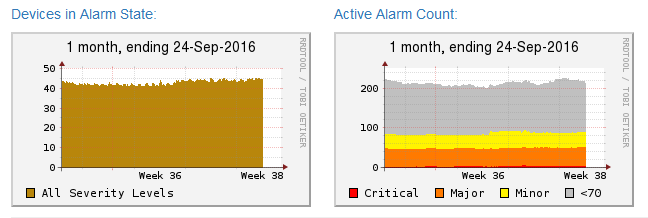
Alarms
When a device enters an abnormal state, it sends a message to “set” an alarm, such as “no dial tone on 555-1234” or “ONT Battery Low”. When operation returns to normal, the alarm is “cleared”. Alarms are first-class objects in the B3 Monitor:
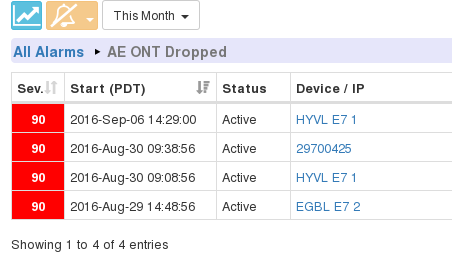
For any alarm, the severity, duration, and device are presented, and the starting “set” and ending “clear” messages can be viewed with a single click.